
It looks like Earth will be hit by a moderate solar storm. Here’s what you need to know about how it will happen and what to look out for.
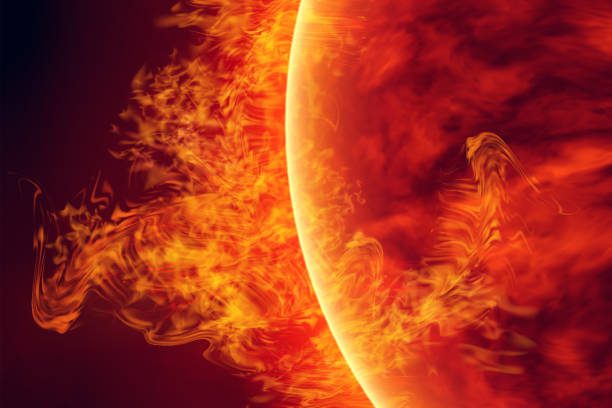
A geomagnetic storm watch was sent out by the National Oceanic and Atmospheric Administration’s (NOAA) Space Weather Prediction Center after it saw a Coronal Mass Ejection (CME)—a piece of the sun’s coronal mass pulling away from it. Earth will have a mild solar storm on Monday and Tuesday because of this CME.
How the piece of mass reacts with Earth determines the type and level of damage that the solar storm does. Sunlight winds, plasmas, and forces in the Earth’s atmosphere can change it.
It is possible for solar storms to mess up technology like radios, GPS systems, and other navigating systems. Along with that, it can add energy to the magnetosphere, which can make it denser and more evenly distributed. This can make satellites closer to Earth move more slowly.
Shawn Dahl, who is in charge of NOAA’s Space Weather Prediction Center, talked about the solar storm and what we can expect.
For the most part, Dahl doesn’t think the solar storm will change our daily lives. But he did say that the power grid might see some strange things, but that they are set up and designed to be able to handle it.
This storm in the sun could push the Northern Lights to places where people usually don’t see them. People usually only see the Northern Lights, or aurora borealis, in Alaska, Finland, Sweden, Norway, Russia, and a few other places. They don’t usually go any further than that.
The Northern Lights can be seen from Florida to Southern Texas during a G5 solar storm, which is the largest type of solar storm. Stronger solar storms will cause the lights to move farther south.
Dahl also said that the solar storm that is coming our way is a G2 storm and that people shouldn’t be worried about it.
More and more of these solar storms can happen when the sun hits its highest point. Every 11 years, it hits its highest point in the sky and then goes back to normal. Dahl also said that the next peak in the solar cycle should happen between now and October.
At the end of his speech, he talked about the sun eclipse that will happen on April 8 and be visible to most people.