
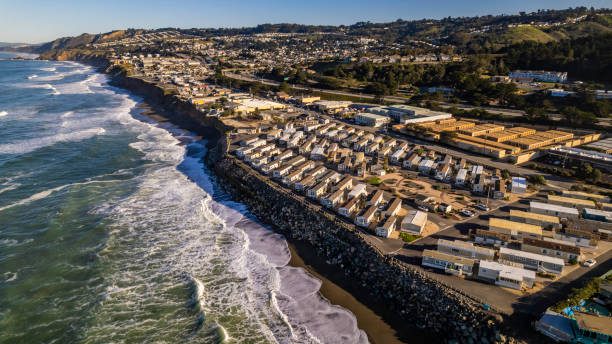
Experts are worried about what climate change and rising sea levels could mean for trade and shipping at ports based on new studies.
By 2100, the sea level was expected to rise an average of 2 feet, which would have an impact on coastal towns and seaports. But recently, experts said that these changes might happen faster than thought. For example, the US Geological Survey said that the Northeastern US shoreline will change within the next ten years or so.
Using information from the US Geological Survey, 67,000 people live along the East Coast in places where storms, rising sea levels, and other dangers could change or wear away the land around the coast in the next ten years.
The report also said that the rising sea level would affect more than 45 seaports on the eastern coastline. It also said that more than 67,000 people, companies, communities, and places of worship would have to move.
Rising sea levels could change 60,000 jobs at the port of Boston, making it one of the most sensitive places that could be hurt. People say that the changes might not have as much of an impact on smaller ports or on the community as a whole. However, the bigger ports may have a harder time because of the changes to the infrastructure that would happen.
The American Association of Port Authorities says that ports create or protect 31 million jobs, both directly and indirectly. This shows that a problem with the ports could have a wide range of effects on nearby towns.
Any way you look at it, places along the coasts are getting more money and making changes. The Biden Administration just recently released a federal grant that would be available to help improve certain shipping terminals with capital costs. Ten ports on the East Coast have gotten grants from this scheme.
Ports should also think about climate change and what they can do and how they can adapt to make sure problems don’t happen as the environment changes. They tell them to strengthen infrastructure or move parts that are weak, like power and fuel plants.