
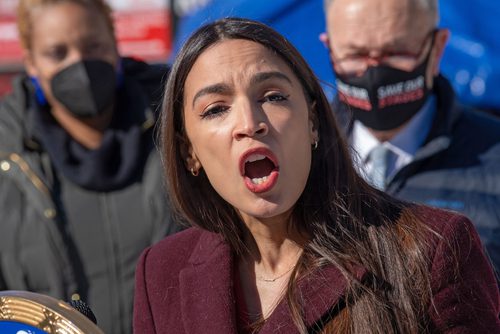
Democratic New York Rep. Alexandria Ocasio-Cortez said that she’s voting against the debt limit bill ahead of the Department of Treasury’s June 5 deadline.
Ocasio-Cortez, one of the most high-profile Democrats in Congress, previously signaled that she would oppose the bill.
“My red line has already been surpassed,” she said last month. “I mean, where do we start? [No] clean debt ceiling. Work requirements. Cuts to programs. I would never — I would never — vote for that.”
Ocasio-Cortez wasn’t the only Democrat who was against the bill. Michigan Rep. Rashida Tlaib also delivered a similar warning, saying that she would “absolutely not” support a debt limit bill with tougher requirements.
This comes after Republican House Speaker Kevin McCarthy and President Biden announced on May 27 that they had reached a tentative agreement on a debt ceiling deal after weeks of negotiations between the two parties.
“Everybody won’t like what is the end of the agreement … on both sides,” McCarthy said at the time. “But … at the end of the day I think people should see what that product is before people vote on it.”
As expected, Republican lawmakers were not happy with the agreement, many of whom point out that the hike in the revised bill was capped at $1.5 trillion. The deal McCarthy cut with Biden was expected to be nearly three times that figure.
“Unacceptable,” the Freedom Caucus tweeted.
North Carolina Rep. Dan Bishop also said that a debt ceiling increase of that size would prompt a “war” between the GOP and leadership.
“If [the] Speaker’s negotiators bring back in substance a clean debt limit increase … one so large that it even protects Biden from the issue in the presidential …, it’s war,” Bishop tweeted.
For months, Biden has used the negotiations as a bargaining chip and called Republicans’ demands for concessions “hostage taking” that might damage the country’s global reputation and economic stability.
The approach also shows continued confidence in the fact that the president still has the upper hand in a debt ceiling staredown and that a crisis point was only a matter of when, not if, the two sides would come to blows.