
In light of recently revealed emails, David Weiss, the US attorney for Delaware, may not have had “ultimate authority” over the Hunter Biden investigation and its associated charges, the Federalist reported on Monday.
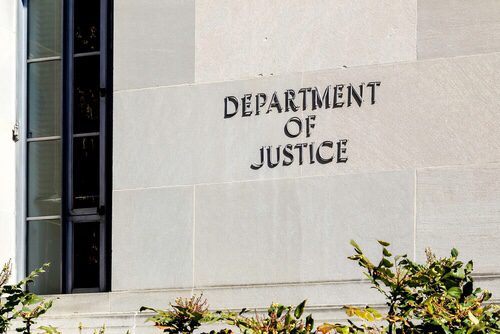
After pursuing a Freedom of Information Act lawsuit, The Heritage Foundation was able to access the emails, which reveal that Weiss, who was just appointed special counsel in the federal investigation against Hunter Biden, may have worked with the Justice Department on several occasions to respond to questions from Republican senators about the matter.
The highly restricted emails seem to go against the letter Weiss wrote to Jim Jordan, a Republican from Ohio who serves as the chairman of the House Judiciary Committee, claiming to have “ultimate authority” over the decisions on whether or not to charge Biden.
Although Weiss appears willing to “take the lead” in composing the responses provided, Department of Justice officials seem to be doing so in the emails.
New information from FOIA emails raises doubts about the scope of Weiss’ authority by indicating that Merrick Garland, the attorney general, was also involved in managing the flow of information to House investigators.
Weiss specifically asked Shannon Hanson in one email for assistance from the DOJ’s Office of Legislative Affairs (OLA) to reply to letters given to him by Sens. Ron Johnson, R-Wis., and Chuck Grassley, R-Iowa, in May 2022.
In the end, the OLA was the one to respond, announcing that they would not be answering the queries.
OLA again took charge of crafting the response in a follow-up letter written to Weiss, FBI Director Christopher Wray, and Attorney General Merrick Garland.
It is customary for congressional requests to be forwarded through an agency’s legislative affairs department, based on Kash Patel, a former federal public defender and House Intelligence Committee assistant.
He emphasized, however, that the DOJ does not routinely participate in “conspiratorial schemes” that might be seen as an effort to undermine constitutional supervision and obstruct the release of materials.
The issue surrounding the DOJ’s participation in responding to congressional queries adds another level of complication to the case as the investigation and judicial procedures advance.