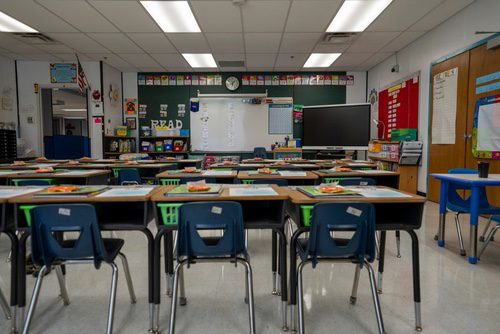
The Biden administration issued a call on Monday for all U.S. schools to maintain a supply of naloxone and to provide training to students and staff on its proper administration in the event of an opioid overdose on school premises.
“In the midst of this fentanyl overdose epidemic, it is important to focus on measures to prevent youth drug use and ensure that every school has naloxone and has prepared its students and faculty to use it,” a “Dear Colleague” letter signed by Education Secretary Miguel Cardona and Office of National Drug Control Policy Director Rahul Gupta, reads.
In a joint letter, Education Secretary Miguel Cardona and Surgeon General Vivek Murthy emphasized the urgency of the situation, pointing out that 107,000 people lost their lives to overdoses last year.
While 2022 marked the first year in which overdose numbers began to decline, the officials deemed this figure still unacceptably high.
They stressed that naloxone is a safe and effective tool for saving lives and directed schools to utilize webinars and online resources to educate faculty, staff, parents, and community leaders on the benefits of naloxone.
Additionally, the guidance aims to help schools establish a safe, supportive, and drug-free learning environment.
“Studies show that naloxone access can reduce overdose death rates, that its availability does not lead to increases in youth drug use, and that it causes no harm if used on a person who is not overdosing on opioids,” they wrote, noting many states have Good Samaritan laws that protect bystanders who help at the scene of an overdose.
This initiative to stock naloxone in schools aligns with the broader efforts of the Biden administration to combat the opioid epidemic and increase the accessibility of naloxone.
It also follows the recent milestone of Narcan becoming the first over-the-counter naloxone antidote, with the Food and Drug Administration granting its over-the-counter approval in March.
Since then, the FDA has also approved a generic version of Narcan and another brand-name nasal spray called ReVive.
“It will be important for your schools to take advantage of this opportunity, and to encourage families to have naloxone at home,” Cardona and Gupta wrote about the new availability of the treatment. “Local public health departments, state behavioral health agencies, and state educational agencies can be helpful in working with schools and districts to access naloxone.”
“There is no time to waste when responding to an overdose, and it is critical that youth and school personnel can access naloxone on school grounds during and after school.”