
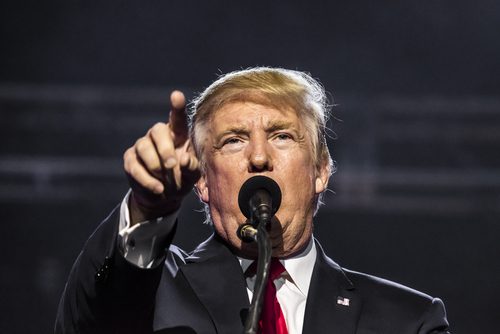
Special Counsel Jack Smith requested U.S. District Judge Tanya Chutkan to keep the gag order she issued against former President Donald Trump in his 2020 election interference case.
This comes after Chutkan issued a gag order on the former president following a contentious hearing where Trump’s attorneys and federal prosecutors clashed over how he would be able to discuss special counsel Jack Smith’s prosecution against him during his campaign.
“I understand that you have a message you want to get out,” Chutkan said at the time. “I do not need to hear any campaign rhetoric in my court.”
The order forbids anyone with access to the information being provided to Trump’s team from sharing or revealing it with outside parties, including on social media, without the court’s prior approval.
In a 32-page filing on Wednesday, Smith’s office asked the judge to maintain the order, alleging that it is necessary to ensure a trial “untainted by harassment, intimidation, and threats.”
“The defendant knows the effect of his targeting and seeks to use it to his strategic advantage while simultaneously disclaiming any responsibility for the very acts he causes,” prosecutors argued.
According to the prosecution, Trump and his “over 100 million followers” are aware of the speech’s purpose. They claim that the former president’s targeting puts witnesses at “significant and immediate risk” of intimidation or influence and that “attorneys, public servants, and other court staff will themselves become targets for threats and harassment.”
They cite his “repeated violations of a similar order in New York” and remarks he made this week regarding former White House Chief of Staff Mark Meadows and his possible testimony in the case, among other things, following Chutkan’s temporary suspension of the order.
“Some people would make that deal, but they are weaklings and cowards, and so bad for the future our Failing Nation,” Trump wrote on the social media platform Truth Social on Tuesday. “I don’t think that Mark Meadows is one of them, but who really knows?”
Prosecutors went on to say that he also “capitalized on the Court’s administrative stay to, among other prejudicial conduct, send an unmistakable and threatening message to a foreseeable witness in this case.”