

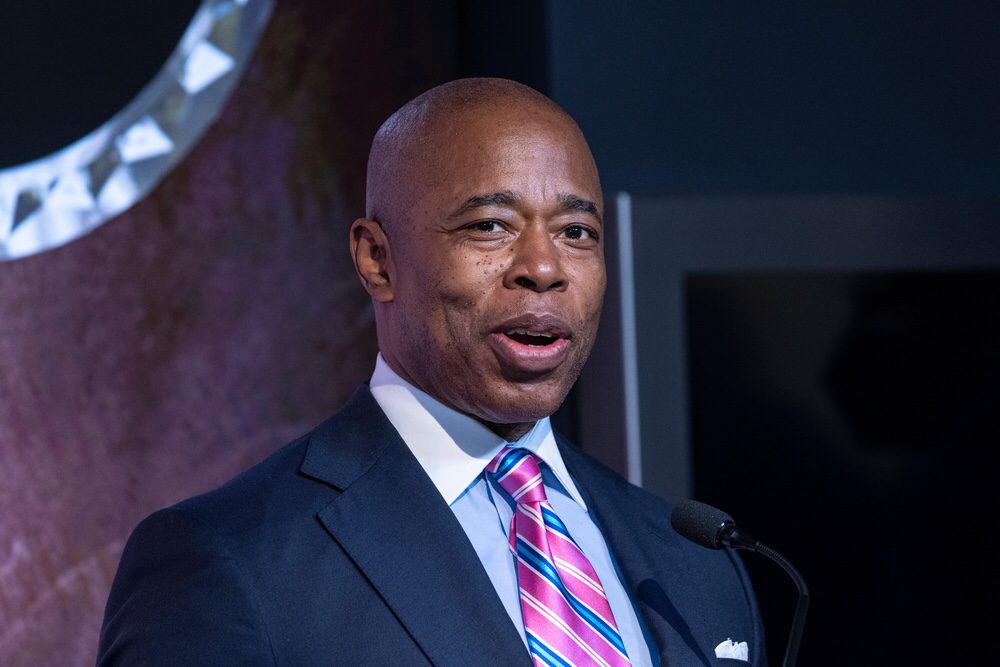
New York City sparked controversy after the city’s health department, with the support of Mayor Eric Adams (D) announced its move to push for monetary payments.
The department claimed that reparations would rectify the enduring impact of slavery, despite its abolition 158 years ago.
A recent report titled “Analyzing the Racial Wealth Gap and Implications for Health Equity,” released by the NYC Department of Health, forms the basis of this call for reparations.
The report, backed by Mayor Adams’s administration, seeks acknowledgment, redress, and closure for the historical injustices of slavery and racial discrimination, including the era of Jim Crow laws, even though New York never enacted such laws.
The goal is to address the racial wealth gap and health disparities that persist to this day.
“For much of American history, there has been a record of systematic policies implemented by the federal government that helped build wealth for White households while suppressing wealth accumulation for other groups, including Black and Hispanic households,” the paper reads.
“While the most explicit racially discriminatory policies have been repealed or otherwise formally abandoned, unequal enforcement and lack of investment in certain individuals, populations, and institutions have resulted in stark inequities between racial and ethnic groups in America,” the paper added.
“Today’s racial wealth inequities are the result of barriers created by a complex web of historical policies and practices, that often reinforce one another,” it continued.
Last year, Mayor Adams, who is of African-American descent, urged corporations to provide reparations if their wealth foundation could be traced back to slavery, deeming it long overdue.
“We need to zero in on some of those corporations and companies that the foundation of their wealth came from slavery,” Adams at the time.
“This is long overdue and something I supported for many years,” he added.
He and other advocates believe that reparations would bridge the wealth gap between black and white Americans, with the recent NYC report claiming that it would also lead to reduced health inequalities.
However, not all are in favor of this approach. Conservatives, in particular, have expressed their reservations.
Joe Borelli (R-Staten Island), the minority leader in NYC’s council, blasted Health Commissioner Ashwin Vasan for the report.
“Add reparations and sowing racial divisiveness to the list of greatest policy hits by Commissioner Vasan’s and his health department, right alongside the crack pipe vending machine, heroin ‘empowerment’ signs on subways, firing unvaccinated city workers, supporting government drug dens; and banning unvaccinated kids from sports,” Borelli lamented.
Gerard Kassar, chairman of the Conservative Party of New York also argued that the state already addresses health inequalities through its robust Medicaid program, emphasizing that the focus should be on the present rather than dwelling on the past.
Nonetheless, the New York Legislature has already given its approval for a reparations commission, awaiting Governor Kathy Hochul’s (D) signature. This move follows a similar commission in California, which proposed recommendations amounting to a staggering $100 billion burden on the state’s taxpayers.