
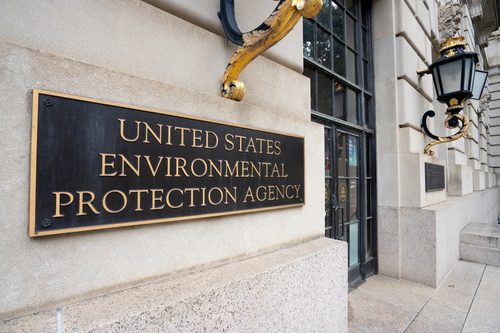
The U.S. Supreme Court has struck a blow against the Biden administration’s Environmental Protection Agency (EPA) over its authority over American waters.
Justice Samuel A. Alito Jr., writing for a majority of five justices, explained that the “Clean Water Act” (CWA) violates the EPA’s claim on other bodies of water.
“The reach of the Clean Water Act is notoriously unclear,” Alito Jr. wrote. “Any piece of land that is wet at least part of the year is in danger of being classified by E.P.A. employees as wetlands covered by the act, and according to the federal government, if property owners begin to construct a home on a lot that the agency thinks possesses the requisite wetness, the property owners are at the agency’s mercy.”
Justice Brett Kavanaugh, however, joined three liberal justices in issuing an opposing opinion, saying that the decision would harm the EPA’s ability to combat pollution.
“By narrowing the act’s coverage of wetlands to only adjoining wetlands,” Kavanaugh wrote. “The court’s new test will leave some long-regulated adjacent wetlands no longer covered by the Clean Water Act, with significant repercussions for water quality and flood control throughout the United States.”
American farmers have long complained about the CWA after a new rule was approved in December that would redefine which “waters of the United States” are federally protected under the CWA.
EPA Administrator Michael Regan said the regulation change “safeguards our nation’s waters, strengthens economic opportunity, and protects people’s health.”
Critics, however, said it would result in increased federal scrutiny of how farmers and other landowners treat water sources on their property, such as ravines and creeks, creating additional costs.
“AFBF is extremely disappointed in the EPA and Army Corps of Engineers’ new Waters of the United States Rule,” said Zippy Duvall, the president of the American Farm Bureau Federation. “Farmers and ranchers share the goal of protecting the nation’s waterways, but they deserve rules that don’t require a team of attorneys and consultants to identify ‘navigable waters’ on their land.”
“EPA has doubled down on the old significant nexus test, creating more complicated regulations that will impose a quagmire of regulatory uncertainty on large areas of private farmland miles from the nearest navigable water,” Duvall continued.