

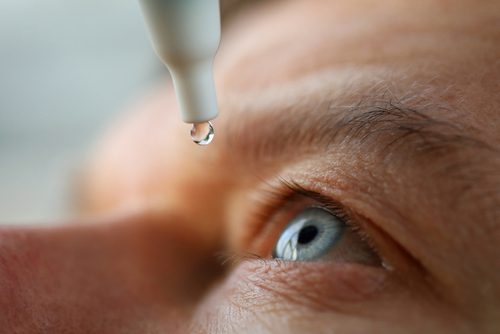
Over-the-counter eye drops were recalled by a company after the FDA and CDC issued warnings, linking the products to drug-resistant infections that may have led to at least one death in the United States.
On Wednesday, the Global Pharma Healthcare issued a recall for the artificial tears made by EzriCare Artificial Tears following the advisories issued by the Centers for Disease Control and Prevention (CDC) and Food and Drug Administration (FDA).
According to the federal officials, the eyedrops may be contaminated and linked to an outbreak of
Pseudomonas aeruginosa bacteria.
“Global Pharma Healthcare is notifying the distributors of this product, Aru Pharma Inc. and Delsam Pharma and is requesting that wholesalers, retailers, and customers who have the recalled product should stop use,” the notice reads.
According to the CDC and FDA, about 55 cases were reported across 12 states which include Colorado, California, Florida, Connecticut, New York, New Jersey, New Mexico, Texas, Utah, Nevada, Wisconsin and Washington.
In an official statement released by Paul Volberding, professor emeritus of epidemiology and biostatistics at the University of California San Francisco School of Medicine, he claimed that “Eye infections are always an obvious concern as severe complications including permanent vision loss can result,” adding that “the current report of infections linked to eye drops is quite alarming.”
According to health websites, the Pseudomonas aeruginosa bacteria are often found in water and soil. But the CDC claimed that the bacteria is “constantly finding new ways” to evade antibiotics.
“In 2017, multidrug-resistant variants of the bacteria caused some 32,600 infections among hospitalized patients and around 2,700 deaths in the United States, it says,” The Epoch Times reported.
Moreover, in the statement, Dave Patel, an ophthalmologist at the Mayo Clinic in Phoenix, suggested that “individuals who don’t use eye drops often should be wary of using products that don’t have preservatives. Generally, artificial tears use benzalkonium chloride, or BAK,” the report added.
“Non-preserved products don’t have that protection and are in danger of being contaminated,” Patel said.
Patel also added that “using it once or twice a day is not detrimental to the eye. But if you use it six to eight times a day for years, it builds toxicity and irritates the eyes.”